
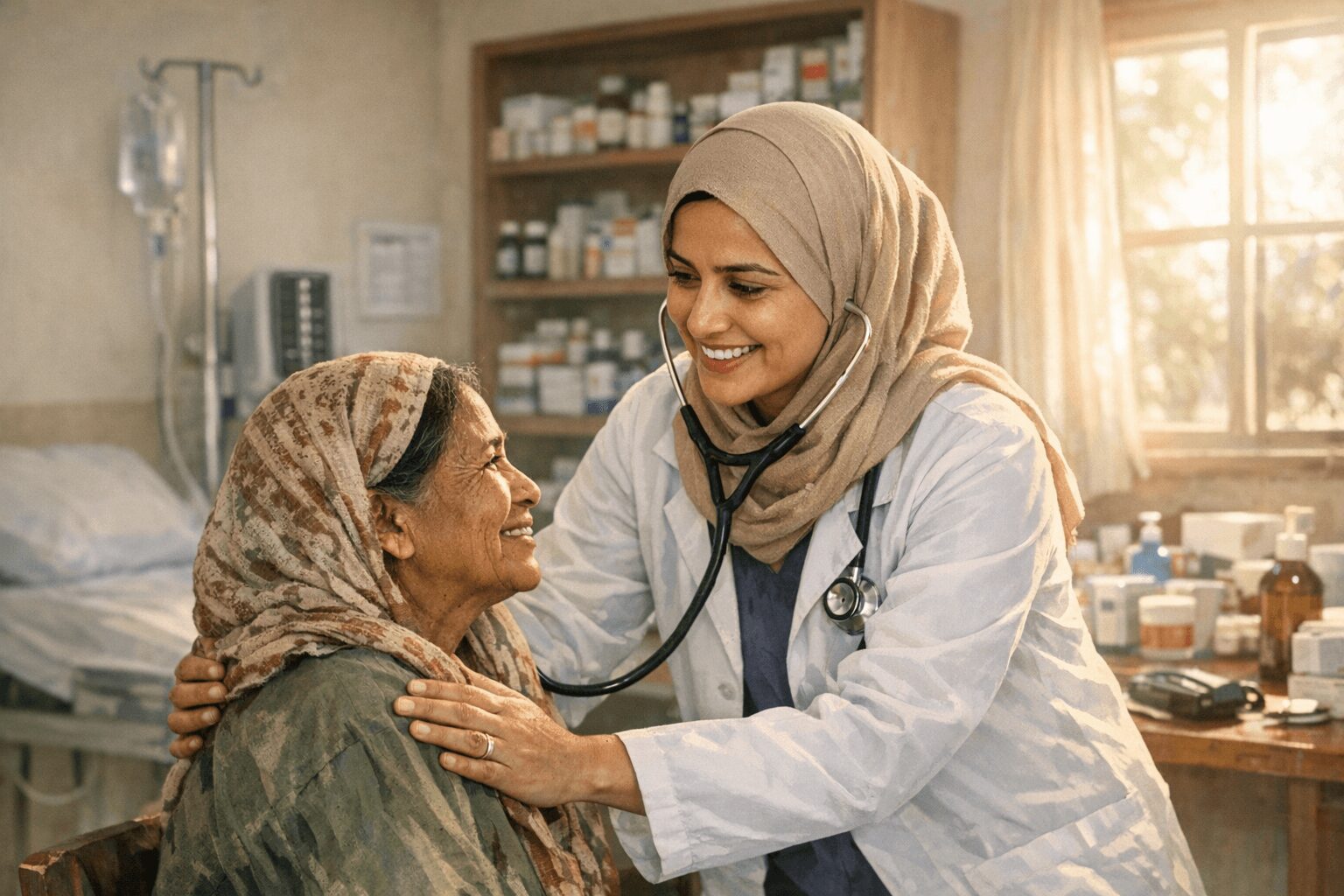
How Zakat Supports Lifesaving Medical Services
Zakat, one of the five pillars of Islam, is a structured form of charitable giving designed to support those in need. Within the healthcare context, the International Health Development Foundation (IHDF) applies Zakat donations directly to provide imperative medical services in underserved communities, particularly in Bangladesh and Ghana. These donations fund free clinics, where patients who cannot afford care receive consultations and treatment at no cost. Essential medicines, often out of reach for impoverished populations, are supplied through these clinics, improving health outcomes and preventing complications from untreated illnesses.
Besides direct treatment, diagnostic assessments are crucial to properly identify medical conditions early. Zakat funds help cover costs for diagnostic tests such as blood work, screenings, and imaging, ensuring accurate diagnosis without the financial burden falling on the patient. This approach enables IHDF to deliver comprehensive medical support that spans from basic care to detailed investigations, all underpinned by the principle of accessible healthcare financed through Zakat.
Funding Cataract Treatment and Maternal Care
Cataract is a leading cause of preventable blindness in many low-income countries. IHDF uses Zakat donations to facilitate referrals for cataract surgeries, connecting patients who otherwise would have no pathway to treatment. By funding these referrals and associated surgical costs, Zakat contributions restore sight and improve quality of life for numerous individuals. This focused use of funds ensures that medical intervention reaches where it is most needed, avoiding neglect of treatable eye conditions.
Maternal health is another critical area supported by Zakat-funded programmes. Many women in impoverished communities suffer from lack of access to prenatal, childbirth, and postnatal care. Zakat donations enable IHDF to provide maternal health support, including education, nutritional supplements, and skilled assistance during delivery. This support reduces risks to both mother and infant, addressing complications that may otherwise result from inadequate care. Providing these services aligns with Islamic teachings encouraging care for vulnerable mothers and children.
Channels for Zakat Giving to Eligible Beneficiaries
For Zakat to be valid, it must be given to eligible recipients as specified in Islamic law. IHDF ensures that Zakat donations are channelled to healthcare beneficiaries who qualify under these guidelines. Typically, these categories include those who are poor, destitute, or burdened with medical expenses they cannot meet. IHDF applies a rigorous process to verify eligibility, balancing religious observance with the practicalities of poverty and health need.
Donors can be confident that their Zakat contributions meet both religious requirements and humanitarian impact. IHDF offers guidance on how donors may allocate Zakat funds specifically for medical care, ensuring the recipients truly need support and that funds are applied transparently. This system preserves the spiritual and social value of Zakat as an obligatory form of charity, while advancing practical access to healthcare.
The Impact of Structured Giving on Healthcare Access
Systematic Zakat giving creates a reliable funding base that allows IHDF to plan and deliver sustainable healthcare services. Rather than isolated donations, structured Zakat contributions help establish ongoing free clinics, regular supply of medicines, and continuous maternal health programmes. This regularity is vital for patients who might otherwise face interruption or lack of treatment due to expense.
Through this approach, patients living in poverty gain access to medical care they would otherwise be denied. Chronic diseases, cataracts, pregnancy complications, and other health issues are tackled more effectively when healthcare resources are predictable and well-managed. By converting Zakat obligations into purposeful health interventions, IHDF helps uphold the dignity and wellbeing of vulnerable individuals and communities.
These services exemplify how religious duty and humanitarian need intersect, with Zakat acting as a powerful mechanism to reduce health inequalities. As demonstrated by international health research, consistent funding and targeted care delivery are essential for improving medical outcomes in low-resource settings Source: World Health Organization. Furthermore, medical charity projects funded by Zakat also reinforce social solidarity within Muslim communities by fostering care for the sick, in line with the example of Prophet Muhammad (Peace Be Upon Him) encouraging compassion and support for those in distress.